Some quotes first:
"I went to the peace office and instead of typing letters for the peace boys I wrote to newspapers saying I had been hurt and it was bad and not all right and because I didn't know sophisticated words I used the words I knew and they were very shocked to death; and the peace boys were in the office and I refused to type a letter for one of them because I was doing this and he read my letter out loud to everyone in the room over my shoulder and they all laughed at me, and I had spelled America with a 'k' because I knew I was in Kafka's world, not Jefferson's, and I knew Amerika was the real country I lived in." P.xvi
“ "The worst immorality," she wrote, "is in living a trivial life because one is afraid to face any other kind of life-a despairing life or an anguished life or a twisted and difficult life."” p. xix.
"man' and 'woman' are fictions, caricatures, cultural constructs ... reductive, totalitarian, inappropriate to human becoming," P. xxiii.
“Men often react to women's words--speaking and writing as if they were acts of violence; sometimes men react to women's words with violence. So we lower our voices. Women whisper. Women apologize. Women shut up. Women trivialize what we know. Women shrink. Women pull back. Most women have experienced enough dominance from men-control, violence, insult, contempt--that no threat seems empty. Intercourse does not say, forgive me and love me. It does not say, I forgive you, I love you. For a woman writer to thrive (or, arguably, to survive) in these current hard times, forgiveness and love must be subtext. No. I say no.” P. xxxi
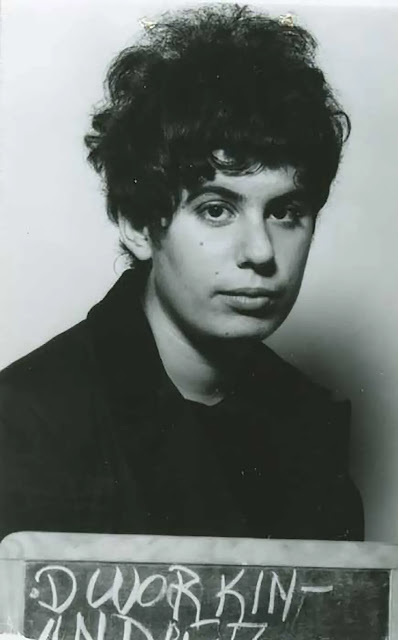
"I went to the peace office and instead of typing letters for the peace boys I wrote to newspapers saying I had been hurt and it was bad and not all right and because I didn't know sophisticated words I used the words I knew and they were very shocked to death; and the peace boys were in the office and I refused to type a letter for one of them because I was doing this and he read my letter out loud to everyone in the room over my shoulder and they all laughed at me, and I had spelled America with a 'k' because I knew I was in Kafka's world, not Jefferson's, and I knew Amerika was the real country I lived in." P.xvi
“ "The worst immorality," she wrote, "is in living a trivial life because one is afraid to face any other kind of life-a despairing life or an anguished life or a twisted and difficult life."” p. xix.
"man' and 'woman' are fictions, caricatures, cultural constructs ... reductive, totalitarian, inappropriate to human becoming," P. xxiii.
“Men often react to women's words--speaking and writing as if they were acts of violence; sometimes men react to women's words with violence. So we lower our voices. Women whisper. Women apologize. Women shut up. Women trivialize what we know. Women shrink. Women pull back. Most women have experienced enough dominance from men-control, violence, insult, contempt--that no threat seems empty. Intercourse does not say, forgive me and love me. It does not say, I forgive you, I love you. For a woman writer to thrive (or, arguably, to survive) in these current hard times, forgiveness and love must be subtext. No. I say no.” P. xxxi
The quotes were from various works, and not this work.

The introductions provide good context, honestly, first introduction I've read which really did that.
First chapter destroyed Tolstoy for me. I've been to the Tolstoy Museum in Moscow, read War and Peace, and the The Kreutzer Sonata, which I'll have to read again because man did she destroy his writing. Yesh, don't really want to read him.
Second chapter was on Kobo Abe. Quite beautiful meditation on touch.
More as I read.
Comments
Post a Comment